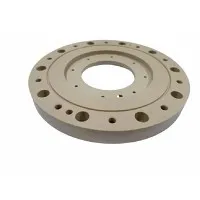
Burrs are a common issue encountered in the milling machining of PEEK (Polyether Ether Ketone), a high-performance thermoplastic known for its excellent mechanical properties, chemical resistance, and thermal stability. As a reliable supplier of milling machining PEEK services, we understand the challenges that burrs can pose to the quality and functionality of the final products. In this blog post, we will delve into the causes of burrs in PEEK milling and explore effective strategies to deal with them.
Understanding the Causes of Burrs in PEEK Milling
Before we can address the issue of burrs, it is essential to understand what causes them. Several factors can contribute to the formation of burrs during the milling process of PEEK:
1. Material Properties
PEEK is a semi - crystalline thermoplastic with a relatively high melting point and a tendency to exhibit viscoelastic behavior during machining. This viscoelasticity can cause the material to deform rather than being cleanly cut, leading to the formation of burrs at the edges of the machined features.
2. Cutting Tool Geometry and Wear
The geometry of the cutting tool plays a crucial role in the quality of the cut. A dull or worn - out cutting tool can increase the cutting forces, causing the material to be pushed and deformed instead of being sheared off cleanly. Additionally, improper tool geometry, such as a large rake angle or a dull cutting edge, can also contribute to burr formation.
3. Cutting Parameters
The selection of cutting parameters, including cutting speed, feed rate, and depth of cut, can significantly affect the formation of burrs. High feed rates and large depths of cut can increase the cutting forces, while low cutting speeds can cause the material to adhere to the cutting tool, both of which can lead to burr formation.
4. Workholding and Fixturing
Inadequate workholding and fixturing can allow the workpiece to move or vibrate during the milling process. This movement can cause inconsistent cutting forces and lead to the formation of burrs.
Strategies to Deal with Burrs after Milling Machining PEEK
1. Optimize Cutting Tool Selection and Maintenance
- Tool Material: Choose cutting tools made of high - speed steel (HSS) or carbide, which are known for their hardness and wear resistance. Carbide tools are particularly suitable for machining PEEK due to their ability to maintain a sharp cutting edge even at high cutting speeds.
- Tool Geometry: Select cutting tools with appropriate geometry for PEEK machining. For example, tools with a small rake angle and a sharp cutting edge can reduce the cutting forces and minimize burr formation.
- Tool Maintenance: Regularly inspect and replace worn - out cutting tools. Sharpening the cutting tools at the appropriate intervals can also help maintain their cutting performance and reduce burr formation.
2. Adjust Cutting Parameters
- Cutting Speed: Increase the cutting speed within the recommended range for PEEK machining. Higher cutting speeds can reduce the cutting forces and improve the surface finish, thereby reducing burr formation.
- Feed Rate: Decrease the feed rate to reduce the amount of material removed per tooth of the cutting tool. This can help prevent the material from being pushed and deformed, resulting in fewer burrs.
- Depth of Cut: Reduce the depth of cut to minimize the cutting forces. Making multiple shallow passes instead of a single deep pass can also improve the surface finish and reduce burr formation.
3. Improve Workholding and Fixturing
- Proper Clamping: Ensure that the workpiece is securely clamped to prevent movement or vibration during the milling process. Use appropriate clamps and fixtures that can provide sufficient holding force without causing damage to the workpiece.
- Vibration Damping: Consider using vibration - damping materials or techniques to reduce the vibrations generated during the milling process. This can help improve the stability of the cutting tool and reduce burr formation.
4. Post - machining Deburring Techniques
- Mechanical Deburring: Mechanical deburring methods, such as filing, sanding, or using a deburring tool, can be used to remove burrs after the milling process. These methods are simple and cost - effective but may require manual labor and can be time - consuming for complex parts.
- Thermal Deburring: Thermal deburring is a process that uses a mixture of oxygen and fuel gas to create an explosion inside a chamber. The explosion removes the burrs by burning them off. This method is suitable for removing burrs from internal passages and complex geometries but requires specialized equipment.
- Chemical Deburring: Chemical deburring involves immersing the workpiece in a chemical solution that selectively dissolves the burrs. This method is suitable for removing small burrs from delicate parts but requires careful control of the chemical concentration and immersion time to avoid damaging the workpiece.
Importance of Dealing with Burrs in PEEK Machining
1. Product Quality
Burrs can affect the dimensional accuracy and surface finish of the machined parts, which can ultimately impact the performance and functionality of the final products. Removing burrs ensures that the parts meet the required quality standards.
2. Assembly and Functionality
Burrs can interfere with the assembly process, causing parts to fit poorly or not at all. They can also cause damage to other components during operation, leading to premature failure of the product.
3. Safety
In some applications, burrs can pose a safety hazard. For example, sharp burrs on medical devices or consumer products can cause injuries to users.
Related CNC Machining Services
In addition to milling machining PEEK, we also offer a wide range of other CNC machining services, including CNC Machining Nylon, CNC Machining Polycarbonate, and CNC Machining PMI Foams and PVC. Our experienced team of engineers and technicians can work with you to select the most appropriate materials and machining processes for your specific application.
Conclusion
Dealing with burrs after milling machining PEEK is a critical step in ensuring the quality and functionality of the final products. By understanding the causes of burrs and implementing the appropriate strategies, such as optimizing cutting tool selection and maintenance, adjusting cutting parameters, improving workholding and fixturing, and using post - machining deburring techniques, we can effectively reduce burr formation and improve the overall machining quality.
If you are in need of high - quality milling machining PEEK services or have any questions about dealing with burrs in PEEK machining, please feel free to contact us for a consultation. Our team is dedicated to providing you with the best solutions to meet your specific needs.


References
- Dornfeld, D. A., & Min, S. (2003). Burr formation and deburring. CIRP Annals - Manufacturing Technology, 52(2), 521 - 542.
- Kalpakjian, S., & Schmid, S. R. (2009). Manufacturing Engineering and Technology. Pearson Prentice Hall.
- Stephenson, D. A., & Agapiou, J. S. (2006). Metal Cutting Theory and Practice. CRC Press.