


Hey there! As a supplier in the precision parts processing industry, I've dealt with all sorts of challenges when it comes to getting that perfect shape accuracy. It's no easy feat, but with the right know - how and techniques, it's definitely achievable. In this blog, I'm gonna share some tips and tricks on how to control the shape accuracy in precision parts processing.
First off, let's understand why shape accuracy is so important. In precision parts processing, even the slightest deviation from the desired shape can lead to big problems. For instance, in the aerospace or medical industries, a part that's even a fraction of a millimeter off can cause malfunctions, safety issues, or even failures. So, getting that shape right is crucial for the proper functioning and reliability of the end - product.
One of the key factors in controlling shape accuracy is the choice of machining process. We offer a variety of machining processes, each with its own advantages and limitations when it comes to shape control.
Let's start with 5 Axis High Complex Machining. This is a really powerful process when you need to create parts with complex shapes. With 5 - axis machining, the cutting tool can move in five different axes simultaneously. This allows for more precise and intricate cuts, which is great for achieving high shape accuracy. For example, if you're making a turbine blade with complex curves and contours, 5 - axis machining can follow those shapes with a high degree of precision. The multi - axis movement reduces the need for re - positioning the workpiece, which in turn reduces the chances of errors that can occur during re - clamping.
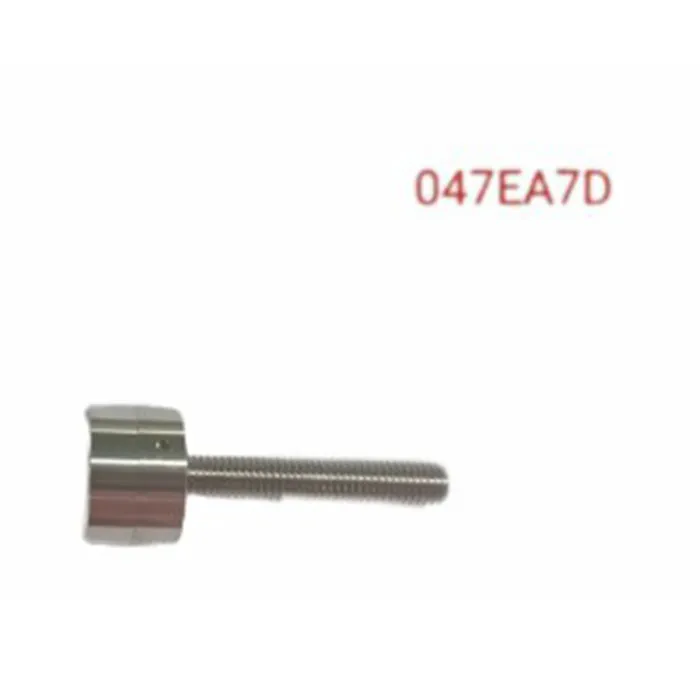

Another important process is Swiss Lathe Machining. Swiss lathes are known for their ability to produce high - precision, small - diameter parts. They work by holding the workpiece in a guide bushing close to the cutting tool. This setup provides excellent support for the workpiece, minimizing deflection during machining. When you're trying to achieve tight shape tolerances on long, slender parts, Swiss lathe machining is often the way to go. The precise control over the cutting process allows us to produce parts with consistent shapes, even for parts with small features.
Then there's CNC Depth Hole Drilling. Drilling deep holes with high shape accuracy can be a real challenge. CNC depth hole drilling uses computer - numerical - control technology to precisely control the drilling process. This ensures that the holes are straight, have the correct diameter, and are located in the right position. The CNC system can adjust the drilling parameters in real - time, compensating for any variations in the material or the cutting process. This is especially important when you're dealing with parts that require deep, accurate holes, like engine blocks or hydraulic components.
Apart from the machining process, the quality of the cutting tools also plays a huge role in shape accuracy. Using high - quality cutting tools is a must. Dull or worn - out tools can cause poor surface finish and inaccurate shapes. We always make sure to use the latest and best - quality cutting tools in our processes. We also regularly inspect and replace the tools to ensure they're in optimal condition. For example, a sharp end mill will cut through the material cleanly, leaving a smooth surface and maintaining the desired shape. On the other hand, a dull end mill might leave rough edges or cause the part to deviate from the intended shape.
The material of the workpiece is another factor to consider. Different materials have different properties, such as hardness, ductility, and thermal conductivity. These properties can affect how the material behaves during machining and, ultimately, the shape accuracy of the part. For example, harder materials might require more powerful cutting tools and slower cutting speeds to avoid excessive tool wear and maintain shape accuracy. So, we carefully select the machining parameters based on the material of the workpiece. We also conduct material testing before starting the machining process to understand its properties better.
Proper fixturing is also essential for shape accuracy. A good fixture holds the workpiece securely in place during machining. It prevents movement and vibration, which can lead to shape errors. We design custom fixtures for each part to ensure a perfect fit. The fixture should distribute the clamping forces evenly across the workpiece to avoid distortion. For example, if you're machining a thin - walled part, an improper fixture might cause the part to deform under the clamping pressure, resulting in an inaccurate shape.
Quality control is an ongoing process in precision parts processing. We use a variety of inspection tools, such as coordinate measuring machines (CMMs), optical measuring systems, and surface roughness testers. These tools allow us to measure the shape of the part accurately and compare it with the design specifications. If we find any deviations, we can make adjustments to the machining process right away. For example, if the CMM shows that a part is slightly out of tolerance in terms of its shape, we can modify the cutting parameters or the tool path to correct the issue.
In addition to these technical aspects, having a well - trained and experienced team is crucial. Our operators are trained to understand the nuances of each machining process and how to optimize them for shape accuracy. They know how to troubleshoot problems that might arise during machining and make quick adjustments. For example, an experienced operator can tell if the cutting tool is starting to wear out just by listening to the sound of the machining process. They can then replace the tool before it causes any significant shape errors.
To sum it up, controlling shape accuracy in precision parts processing involves a combination of the right machining processes, high - quality cutting tools, proper material selection, good fixturing, and effective quality control. By paying attention to these factors, we can ensure that the parts we produce meet the highest standards of shape accuracy.
If you're in the market for precision parts and are concerned about shape accuracy, don't hesitate to reach out to us. We've got the expertise and the technology to meet your requirements. Whether you need parts for the automotive, aerospace, medical, or any other industry, we can help you get the parts you need with the exact shape and precision you're looking for. Let's start a conversation about your project and see how we can work together to achieve the best results.
References
- "Modern Machining Technology" by John A. Schey
- "Precision Manufacturing: Technology and Applications" by Yoram Koren





