Hey there! As a supplier in the surface treatment industry, I've seen firsthand how crucial anti - slip properties are in various applications. Whether it's in industrial settings, public areas, or even our own homes, preventing slips and falls is a top priority. In this blog, I'm gonna break down how surface treatment can significantly enhance the anti - slip properties of different surfaces.
Let's start with the basics. What causes a surface to be slippery? Well, it's usually a combination of factors like the smoothness of the surface, the presence of contaminants (such as water, oil, or dust), and the coefficient of friction between the surface and the object or person in contact with it. A low coefficient of friction means there's less grip, which can lead to slips and falls.
One of the most common ways surface treatment enhances anti - slip properties is by increasing the surface roughness. When you make a surface rougher, you're essentially creating more points of contact between the surface and whatever is on it. This increases the frictional force, making it harder for things to slide.
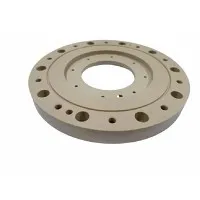
For example, in the case of Engineering Plastic Surface Finishing, we can use techniques like sandblasting or chemical etching. Sandblasting involves shooting small abrasive particles at high speed onto the plastic surface. These particles remove some of the material, creating tiny peaks and valleys on the surface. This rough texture provides better traction, whether it's for a plastic component in a machinery where workers might handle it, or for a plastic floor in a commercial space.
Chemical etching, on the other hand, uses chemicals to dissolve a thin layer of the plastic surface. This also results in a rougher finish. The advantage of chemical etching is that it can be more precise and can create a more uniform roughness compared to sandblasting in some cases.
Now, let's talk about Stainless Steel Surface Finishing. Stainless steel is a popular material due to its durability and corrosion resistance, but it can be quite slippery, especially when wet. We can employ methods like shot peening. Shot peening is similar to sandblasting, but instead of sand, small metal shots are propelled at the stainless - steel surface. The impact of these shots deforms the surface, creating a dimpled or rough texture. This not only improves the anti - slip properties but also can enhance the fatigue resistance of the stainless - steel component.
Another option for stainless steel is to apply a non - slip coating. These coatings are specially formulated to have a high coefficient of friction. They can be made of materials like epoxy or polyurethane with added anti - slip agents such as silica sand or aluminum oxide particles. The coating adheres to the stainless - steel surface, providing a durable and anti - slip layer.
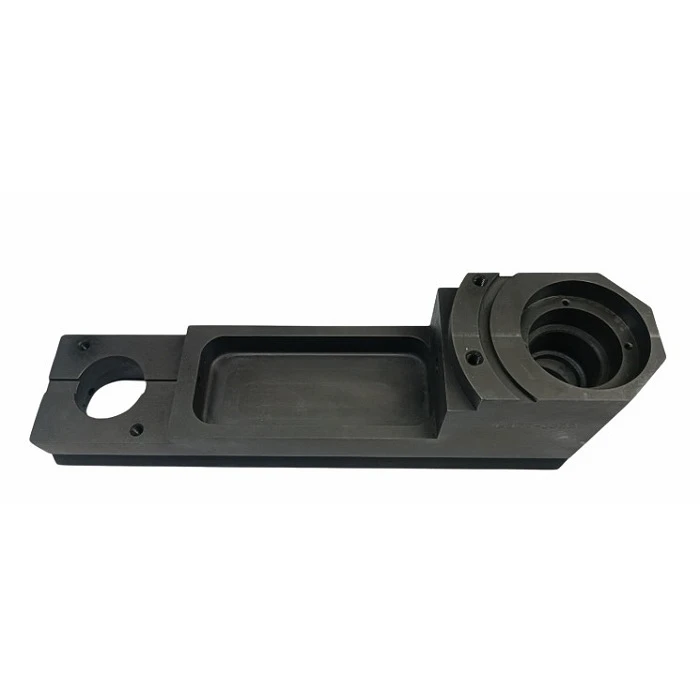
Moving on to Mid - carbon Steel Surface Finishing. Mid - carbon steel is often used in construction and industrial applications. One way to improve its anti - slip characteristics is through heat treatment followed by a texturing process. Heat treatment can change the microstructure of the steel, making it harder and more resistant to wear. After heat treatment, processes like laser texturing can be used. Laser texturing uses a high - energy laser beam to create patterns on the steel surface. These patterns can range from simple lines to more complex geometric shapes. The patterns increase the surface area in contact with other objects, thereby improving the anti - slip performance.
In addition to mechanical and chemical methods, surface treatment can also involve the use of additives. For example, in floor coatings, we can add anti - slip additives during the manufacturing process. These additives can be in the form of fine particles that are evenly distributed throughout the coating. When the coating is applied to a surface, these particles protrude slightly, increasing the surface roughness and friction.
The choice of surface treatment also depends on the environment in which the surface will be used. In a food processing plant, for instance, any surface treatment method must be food - safe. So, we might opt for a non - toxic anti - slip coating or a mechanical treatment that doesn't generate any harmful residues. In an outdoor environment, the surface treatment needs to be weather - resistant. Coatings that can withstand UV rays, rain, and temperature changes are essential to maintain the anti - slip properties over time.
Moreover, surface treatment can be customized according to the specific requirements of the client. If a client needs a surface with a very high level of anti - slip, we can combine multiple treatment methods. For example, we can first sandblast a surface to create a base roughness and then apply an anti - slip coating on top for added protection and enhanced performance.
It's also important to note that regular maintenance is crucial for maintaining the anti - slip properties of a treated surface. Over time, wear and tear can reduce the effectiveness of the surface treatment. Cleaning the surface regularly to remove contaminants and checking for any signs of damage or deterioration can help ensure that the anti - slip properties remain intact.
In conclusion, surface treatment is a powerful tool for enhancing the anti - slip properties of various surfaces. Whether it's plastic, stainless steel, or mid - carbon steel, there are numerous methods available to increase friction and prevent slips and falls. As a surface treatment supplier, we're committed to providing the best solutions for our clients' needs.
If you're interested in improving the anti - slip properties of your surfaces, whether it's for a small project or a large - scale industrial application, I encourage you to reach out to us. We can discuss your specific requirements and come up with a customized surface treatment plan. Let's work together to make your surfaces safer and more functional.
References
- ASTM International. (2021). ASTM F1677 - 18 Standard Test Method for Using a Variable Incidence Tribometer to Measure Dynamic Coefficient of Friction of Hard, Non - Carpeted Flooring Surfaces.
- AS/NZS 4586:2013. (2013). Slip resistance classification of new pedestrian surface materials.
- ISO 13287:2007. (2007). Geosynthetics - Determination of the coefficient of friction between geosynthetics and soil or rock.