
Hey there! As a supplier of swiss turning machines, I often get asked whether these machines can handle complex parts. Well, let me tell you, swiss turning machines are absolute rock - stars when it comes to processing complex components. In this blog, I'll break down how they can do it, why they're great at it, and how you can benefit from using them for your projects.
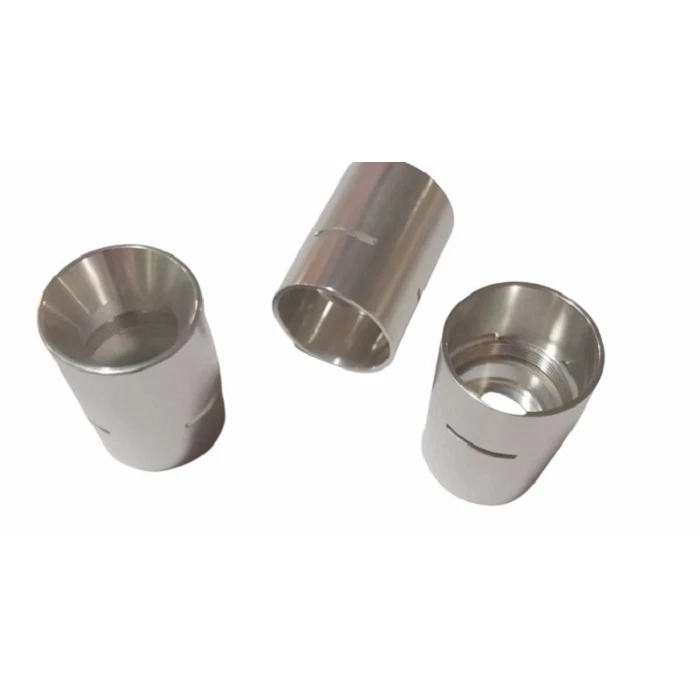
First off, what makes a part "complex"? Complex parts usually have features like tight tolerances, intricate geometries, multiple operations, and high - precision requirements. Think of parts in the aerospace, medical, and electronics industries. For example, in the medical field, tiny surgical instruments need to be made with extreme accuracy to ensure they work properly. In aerospace, components need to withstand high - stress environments and have very precise dimensions.
Swiss turning machines are uniquely designed to handle these challenges. One of the key features of swiss turning machines is their sliding headstock design. This design allows the workpiece to move axially while the cutting tools remain stationary. This is a game - changer because it reduces the amount of deflection in the workpiece. When you're machining a long, thin part, deflection can cause inaccuracies. With the sliding headstock, the tool is always cutting close to the guide bushing, which provides support to the workpiece. This means you can achieve much higher precision, even when working on complex shapes.
Another advantage is the ability to perform multiple operations in a single setup. Swiss turning machines are often equipped with multiple tool turrets and live tooling. Live tooling allows you to perform milling, drilling, and tapping operations right on the turning machine. This is huge because it eliminates the need to transfer the part between different machines for different operations. For instance, if you need to create a part with both turned and milled features, you can do it all on one swiss turning machine. This not only saves time but also reduces the risk of misalignment that can occur when moving a part from one machine to another.
Let's talk about speed. Swiss turning machines are incredibly fast. They can perform operations at high spindle speeds and rapid traverse rates. This is crucial when you're dealing with complex parts because you often have a lot of small features to machine. The faster the machine can work, the more quickly you can produce your parts. And in today's competitive market, time is money.
Now, I want to touch on the software that controls swiss turning machines. Modern swiss turning machines come with advanced CNC (Computer Numerical Control) systems. These systems allow you to program complex machining operations with ease. You can create detailed tool paths, set up precise cutting parameters, and even simulate the machining process before you start cutting. This helps you catch any potential issues early on and ensures that your final part meets all the specifications.
If you're still not convinced, let me give you some real - world examples. In the electronics industry, swiss turning machines are used to produce connectors. These connectors need to have very tight tolerances and precise geometries to ensure a proper electrical connection. The sliding headstock and live tooling on swiss turning machines make it possible to machine these small, complex parts efficiently.
In the automotive industry, swiss turning machines are used to make fuel injection components. These parts require high - precision machining to ensure proper fuel delivery and engine performance. The ability to perform multiple operations in one setup on a swiss turning machine helps to produce these parts quickly and accurately.
So, how do swiss turning machines compare to other machining methods? Well, if you look at traditional turning machines, they often struggle with long, thin parts and complex geometries. Traditional turning machines don't have the same level of support for the workpiece as swiss turning machines, which can lead to inaccuracies. And when it comes to performing multiple operations, traditional turning machines usually require additional setups on other machines.
If you're considering other advanced machining methods like CNC Turning and Milling Compound Machining, Swiss Lathe Machining, and 5 Axis High Complex Machining, swiss turning machines have their own unique advantages. While 5 - axis machining can handle very complex geometries from multiple angles, swiss turning machines are more specialized for long, thin parts and can perform operations more quickly in some cases.
In conclusion, swiss turning machines are more than capable of processing complex parts. Their unique design, ability to perform multiple operations, high speed, and advanced control systems make them a great choice for a wide range of industries. Whether you're in the medical, aerospace, electronics, or automotive industry, swiss turning machines can help you produce high - quality, complex parts efficiently.
If you're in the market for swiss turning machines or have a project that requires complex part machining, I'd love to hear from you. We have a wide range of swiss turning machines that can meet your specific needs. Contact us to start a conversation about how we can help you with your machining requirements. Let's work together to take your production to the next level.
References
- "Modern Swiss - Type Lathe Technology" by various industry experts
- Technical manuals from leading swiss turning machine manufacturers