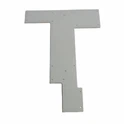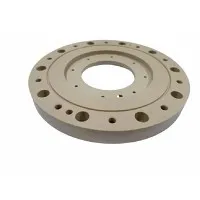

As a supplier specializing in CNC machining polycarbonate, I often get asked if polycarbonate can be machined with a planing CNC machine. Well, the short answer is yes, but there's a lot more to it than that. In this blog post, I'll dive deep into the world of planing CNC machines and their compatibility with polycarbonate, sharing insights based on my hands - on experience in the industry.
First off, let's talk about what polycarbonate is. Polycarbonate is a thermoplastic polymer known for its high impact resistance, optical clarity, and heat resistance. It's used in a wide range of applications, from eyeglass lenses to automotive parts, and even bullet - proof windows. Given its versatility, it's no wonder that many manufacturers want to machine polycarbonate to create custom parts.


Now, a planing CNC machine is a type of computer - numerical - control machine that uses a planing tool to remove material from a workpiece. Planing involves moving the cutting tool linearly across the surface of the material to create a flat or contoured finish. Unlike milling, which often rotates the cutting tool, planing is all about that straight - line motion.
So, can polycarbonate handle the planing process? The answer lies in understanding the properties of polycarbonate and how they interact with the planing operation. Polycarbonate has a relatively low melting point compared to metals. This means that during the planing process, excessive heat generated by friction can cause the polycarbonate to melt or deform. To combat this, it's crucial to use the right cutting parameters.
One of the key factors is the cutting speed. You don't want to go too fast, or you'll generate too much heat. On the other hand, going too slow can lead to a poor surface finish and increased tool wear. A moderate cutting speed is usually the sweet spot. Additionally, the feed rate, which is how fast the workpiece moves relative to the cutting tool, also needs to be carefully controlled. A high feed rate might cause the tool to dig into the polycarbonate too aggressively, while a low feed rate can result in inefficient machining.
Another aspect to consider is the type of cutting tool. For planing polycarbonate, a sharp, high - quality tool is essential. Carbide - tipped tools are often a great choice because they can maintain their edge better and generate less heat compared to some other materials. The geometry of the tool also matters. A tool with a proper rake angle can help in smooth chip removal and reduce the chances of the polycarbonate sticking to the tool.
Let's talk about some of the benefits of using a planing CNC machine for polycarbonate. One major advantage is the ability to achieve a very flat and smooth surface finish. This is especially important for applications where optical clarity is crucial, like in the production of display panels. Planing can also be more efficient for machining large, flat surfaces compared to other processes. It allows for a more uniform removal of material, which can save time and reduce waste.
However, there are also some challenges. As mentioned earlier, the heat generated during planing can be a significant issue. To address this, many manufacturers use coolant or lubricant. Coolants not only help in dissipating heat but also reduce friction between the tool and the polycarbonate, improving the overall machining process. But using coolant requires proper handling and disposal, which adds an extra layer of complexity to the operation.
Now, when it comes to our CNC machining services, we have a wealth of experience in working with polycarbonate. We've fine - tuned our processes to ensure that we can achieve the best results when planing polycarbonate. We use state - of - the - art CNC machines that allow us to precisely control the cutting parameters. Our team of experts is always on hand to monitor the process and make adjustments as needed.
In addition to polycarbonate, we also offer CNC Machining FR4 G10, CNC Machining PMMA, and CNC Machining Nylon services. Each of these materials has its own unique properties and machining requirements, but we've mastered the art of working with them all.
If you're in the market for custom - machined polycarbonate parts, or any of the other plastics we work with, we're here to help. Whether you need a small batch for prototyping or a large - scale production run, we have the capabilities to meet your needs. Our commitment to quality means that you can expect parts that meet the highest standards of precision and finish.
In conclusion, polycarbonate can definitely be machined with a planing CNC machine, but it requires careful consideration of cutting parameters, the right tools, and proper heat management. As a trusted supplier in the industry, we're ready to take on your polycarbonate machining projects and deliver outstanding results. If you have any questions or want to discuss your specific requirements, don't hesitate to reach out. Let's work together to bring your ideas to life.
References
- Machinery's Handbook: A comprehensive reference for machining processes and materials.
- Journal of Manufacturing Science and Engineering: Contains research on the latest advancements in CNC machining technologies.