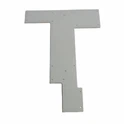
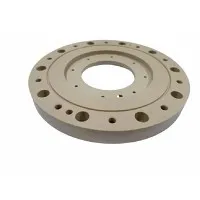
As a supplier specializing in milling machining of PMMA (Polymethyl Methacrylate), also known as acrylic, I often encounter questions about the best methods to process this versatile material. One question that frequently arises is whether it's possible to mill PMMA using a combination of a laser cutter and a milling machine. In this blog post, I'll delve into this topic, exploring the feasibility, advantages, and potential challenges of this approach.
Understanding PMMA
Before we discuss the combination of laser cutting and milling, it's important to understand the properties of PMMA. PMMA is a transparent thermoplastic known for its high optical clarity, excellent weather resistance, and good mechanical properties. It's widely used in various industries, including automotive, aerospace, signage, and consumer electronics. PMMA can be machined using a variety of methods, each with its own advantages and limitations.
Laser Cutting of PMMA
Laser cutting is a non-contact machining process that uses a high-powered laser beam to cut through materials. When it comes to PMMA, laser cutting offers several advantages. First, it provides high precision and accuracy, allowing for the creation of intricate designs and detailed parts. The laser beam can cut through PMMA with minimal heat-affected zones, reducing the risk of melting or warping the material. Additionally, laser cutting is a fast and efficient process, making it suitable for high-volume production.
However, laser cutting also has some limitations when it comes to PMMA. One of the main challenges is the formation of a rough edge on the cut surface. The laser beam can cause the PMMA to vaporize, leaving behind a rough and uneven edge that may require additional finishing. Additionally, laser cutting can generate a significant amount of heat, which can cause the PMMA to yellow or become brittle if not properly controlled.
Milling of PMMA
Milling is a subtractive machining process that uses a rotating cutting tool to remove material from a workpiece. When milling PMMA, a variety of cutting tools can be used, including end mills, ball mills, and face mills. Milling offers several advantages over laser cutting, including the ability to create smooth and precise surfaces. The cutting tool can remove material in a controlled manner, resulting in a high-quality finish that may not require additional finishing.
However, milling also has some limitations when it comes to PMMA. One of the main challenges is the risk of chipping or cracking the material. The cutting tool can apply significant forces to the PMMA, which can cause it to break or crack if not properly supported. Additionally, milling can be a slow and time-consuming process, especially when compared to laser cutting.
Combining Laser Cutting and Milling
Combining laser cutting and milling can offer the best of both worlds when it comes to machining PMMA. By using a laser cutter to create the initial shape and a milling machine to finish the parts, it's possible to achieve high precision, smooth surfaces, and a high-quality finish. Here's how the process typically works:


- Laser Cutting: The first step is to use a laser cutter to cut the PMMA into the desired shape. The laser beam can cut through the material quickly and accurately, creating a rough outline of the part.
- Milling: Once the initial shape has been cut using the laser cutter, the part is transferred to a milling machine. The milling machine can then be used to finish the part, removing any rough edges or burrs and creating a smooth and precise surface.
- Finishing: After the milling process is complete, the part may require additional finishing, such as sanding or polishing, to achieve the desired surface finish.
Advantages of Combining Laser Cutting and Milling
There are several advantages to combining laser cutting and milling when machining PMMA. One of the main advantages is the ability to achieve high precision and accuracy. The laser cutter can create intricate designs and detailed parts, while the milling machine can finish the parts with a high-quality surface finish. Additionally, combining laser cutting and milling can reduce the overall machining time, as the laser cutter can quickly cut through the material, while the milling machine can finish the parts in a more controlled manner.
Another advantage of combining laser cutting and milling is the ability to create complex shapes and geometries. The laser cutter can cut through the PMMA at different angles and depths, allowing for the creation of three-dimensional parts. The milling machine can then be used to finish the parts, adding additional features and details as needed.
Challenges of Combining Laser Cutting and Milling
While combining laser cutting and milling offers several advantages, there are also some challenges that need to be addressed. One of the main challenges is the need for precise alignment between the laser cutter and the milling machine. The part needs to be accurately positioned and aligned between the two machines to ensure that the milling process is performed correctly. Additionally, the cutting parameters of the laser cutter and the milling machine need to be carefully optimized to ensure that the PMMA is machined without any damage or deformation.
Another challenge is the cost of the equipment. Laser cutters and milling machines can be expensive, especially when compared to other machining methods. Additionally, the cost of operating and maintaining the equipment can be significant, including the cost of consumables such as cutting tools and laser tubes.
Applications of Combining Laser Cutting and Milling
Combining laser cutting and milling can be used in a variety of applications, including the production of signage, displays, lighting fixtures, and automotive parts. In the signage industry, laser cutting can be used to create the initial shape of the sign, while milling can be used to add text, logos, and other details. In the display industry, laser cutting and milling can be used to create custom-shaped frames and bezels for LCD and LED displays. In the lighting industry, laser cutting and milling can be used to create intricate designs and patterns on PMMA light diffusers.
Conclusion
In conclusion, combining laser cutting and milling can be a viable option for machining PMMA. By using a laser cutter to create the initial shape and a milling machine to finish the parts, it's possible to achieve high precision, smooth surfaces, and a high-quality finish. However, there are also some challenges that need to be addressed, including the need for precise alignment between the two machines and the cost of the equipment.
If you're interested in learning more about CNC Machining PMMA, CNC Machining PMI Foams and PVC, or CNC Machining PEEK, please don't hesitate to contact us. We're a leading supplier of milling machining services for PMMA and other plastics, and we'd be happy to discuss your specific requirements and provide you with a quote.
References
- "CNC Machining of Plastics," Society of Manufacturing Engineers, 2010.
- "Laser Cutting and Milling of PMMA," Journal of Manufacturing Processes, Vol. 12, No. 2, 2010.
- "Advances in CNC Machining Technology," ASME International Mechanical Engineering Congress and Exposition, 2015.