Hey there! As a supplier of CNC Machining FR4 G10, I often get asked if this material can be used in communication equipment applications. Well, let's dive right into it and find out.
First off, let's talk a bit about what FR4 G10 is. FR4 G10 is a type of fiberglass-reinforced epoxy laminate. It's known for its excellent mechanical and electrical properties. It has high strength, good dimensional stability, and is resistant to moisture and chemicals. These characteristics make it a pretty attractive option for a wide range of applications, including those in the communication field.


In communication equipment, there are several aspects where FR4 G10 can really shine. One of the key requirements in communication devices is electrical insulation. FR4 G10 has outstanding electrical insulation properties, which means it can prevent electrical leakage and interference. This is crucial in ensuring the proper functioning of communication circuits. For example, in printed circuit boards (PCBs) used in communication equipment, FR4 G10 can be used as the substrate. The stable electrical performance of FR4 G10 helps to maintain signal integrity, reducing signal loss and distortion. This is especially important in high - speed communication systems where even the slightest interference can cause significant problems.
Another important factor in communication equipment is mechanical strength. Communication devices are often subject to various mechanical stresses during installation, transportation, and normal use. FR4 G10 has high mechanical strength, which allows it to withstand these stresses without deforming or breaking. This is essential for ensuring the long - term reliability of the equipment. For instance, in the housing or chassis of communication devices, FR4 G10 can be used to provide structural support. Its ability to resist impact and vibration helps to protect the internal components of the equipment.
Thermal management is also a critical issue in communication equipment. As communication devices become more powerful, they generate more heat. FR4 G10 has relatively good thermal properties. It has a low coefficient of thermal expansion, which means it won't expand or contract significantly with temperature changes. This helps to maintain the dimensional stability of the components, preventing damage due to thermal stress. Additionally, it can act as a heat insulator to some extent, protecting sensitive electronic components from excessive heat.
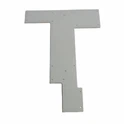
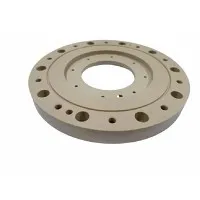
Now, let's talk about the CNC machining aspect. CNC (Computer Numerical Control) machining is a precise manufacturing process that allows us to create complex shapes and designs from FR4 G10. With CNC machining, we can achieve high precision and tight tolerances, which is very important in communication equipment where components need to fit together perfectly. We can machine FR4 G10 into various parts such as connectors, insulators, and brackets with high accuracy.
Compared to other materials commonly used in CNC machining, FR4 G10 has its own unique advantages. For example, when compared to CNC Machining PMMA, PMMA is more transparent and has good optical properties, but it is not as strong or as good in terms of electrical insulation as FR4 G10. So, for applications where electrical performance and mechanical strength are crucial, FR4 G10 is a better choice.
CNC Machining POM is known for its excellent wear resistance and low friction coefficient. However, its electrical insulation properties are not as good as FR4 G10. In communication equipment, where electrical insulation is a top priority, FR4 G10 takes the lead.
Similarly, CNC Machining ABS is a widely used plastic with good impact resistance and processability. But again, it lacks the high - level electrical insulation and mechanical strength that FR4 G10 offers.
In the manufacturing process of communication equipment, the cost - effectiveness of materials is also an important consideration. FR4 G10 is relatively affordable, especially when considering its long - term performance and reliability. The combination of its good properties and reasonable cost makes it a popular choice for many communication equipment manufacturers.
However, like any material, FR4 G10 also has some limitations. One of the main challenges in machining FR4 G10 is its brittleness. During the machining process, there is a risk of cracking or chipping, especially when dealing with sharp corners or thin walls. But with proper machining techniques and tool selection, we can minimize these issues. For example, using sharp cutting tools and appropriate cutting parameters can help to reduce the stress on the material and prevent damage.
Another potential limitation is its relatively high density compared to some other plastics. In applications where weight is a critical factor, this might be a drawback. But in most communication equipment, the weight of FR4 G10 components is usually not a major issue as long as the overall design takes it into account.
In conclusion, CNC machining FR4 G10 can definitely be used in communication equipment applications. Its excellent electrical insulation, mechanical strength, thermal properties, and the ability to be precisely machined make it a suitable material for various components in communication devices. Whether it's for printed circuit boards, housing, or other structural parts, FR4 G10 can contribute to the reliable and efficient operation of communication equipment.
If you're in the communication equipment manufacturing industry and are looking for a high - quality material for your products, I highly recommend considering CNC machining FR4 G10. We, as a supplier of CNC Machining FR4 G10, have the expertise and experience to provide you with top - notch products. We can work closely with you to understand your specific requirements and deliver customized solutions. So, if you're interested in learning more or want to start a procurement discussion, feel free to reach out. We're here to help you take your communication equipment to the next level.
References
- "Handbook of Epoxy Resins" by Henry Lee and Kris Neville
- "Mechanical and Electrical Properties of Fiberglass - Reinforced Polymers" research papers from industry - related academic journals.