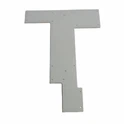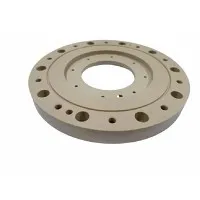

Hey there! As a supplier of CNC Machining FR4 G10, I often get asked whether this material can be used in automotive applications. In this blog, I'm gonna break it down for you and share my thoughts on the matter.
First off, let's talk a bit about what FR4 G10 is. FR4 G10 is a type of fiberglass-reinforced epoxy laminate. It's known for its excellent mechanical and electrical properties. It has high strength, good dimensional stability, and is also resistant to moisture and chemicals. These characteristics make it a popular choice in various industries, but how does it stack up in the automotive world?
Advantages of Using CNC Machining FR4 G10 in Automotive Applications
1. Electrical Insulation
One of the most significant benefits of FR4 G10 in automotive applications is its outstanding electrical insulation properties. In modern vehicles, there's a ton of electrical and electronic systems. From the engine control unit (ECU) to the infotainment system, these components need to be protected from electrical interference. FR4 G10 can be used to create insulating parts such as circuit boards, connectors, and spacers. This helps to prevent short circuits and ensures the reliable operation of the electrical systems. For more on different CNC machining materials, you can check out CNC Machining PMMA and CNC Machining ABS.
2. Mechanical Strength
Automotive components are subjected to a variety of mechanical stresses, including vibrations, shocks, and impacts. FR4 G10 has high mechanical strength, which means it can withstand these forces without deforming or breaking easily. This makes it suitable for manufacturing parts like brackets, supports, and housings. These parts need to be strong enough to hold other components in place and protect them from damage.
3. Chemical Resistance
Vehicles are exposed to a range of chemicals, such as fuels, lubricants, and cleaning agents. FR4 G10 is resistant to many of these chemicals, which helps to extend the lifespan of the components made from it. For example, it can be used in fuel system components or parts that come into contact with engine oil, without being corroded or degraded by the chemicals.
4. Dimensional Stability
In automotive manufacturing, precise dimensions are crucial. FR4 G10 has good dimensional stability, which means that it maintains its shape and size even under different environmental conditions. This is important for parts that need to fit together perfectly, such as gears, bearings, and other precision components. CNC machining allows us to create FR4 G10 parts with high precision, ensuring a proper fit in the automotive assemblies. You can learn more about the CNC machining process for FR4 G10 on our CNC Machining FR4 G10 page.
Challenges and Considerations
1. Cost
One of the main challenges of using FR4 G10 in automotive applications is the cost. Compared to some other materials commonly used in the automotive industry, such as plastics and metals, FR4 G10 can be relatively expensive. This can be a limiting factor, especially for high-volume production. However, when considering the long-term benefits, such as durability and reliability, the cost may be justified in certain applications.
2. Machining Complexity
CNC machining FR4 G10 requires specialized equipment and expertise. The material is hard and abrasive, which can cause tool wear and require higher cutting forces. This means that the machining process may be more time-consuming and costly compared to machining other materials. However, with the right tools and techniques, we can overcome these challenges and produce high-quality FR4 G10 parts.
3. Weight
While FR4 G10 has high strength, it is also relatively heavy compared to some lightweight plastics. In the automotive industry, weight reduction is a major goal to improve fuel efficiency and performance. Therefore, the weight of FR4 G10 components may need to be carefully considered, especially in applications where weight is a critical factor.


Real-World Automotive Applications
Despite the challenges, there are several real-world automotive applications where CNC Machining FR4 G10 is being used successfully.
1. Electric Vehicles (EVs)
In EVs, the demand for high-performance electrical components is increasing. FR4 G10's excellent electrical insulation properties make it a suitable material for battery management systems, power electronics, and charging connectors. These components need to be reliable and safe, and FR4 G10 helps to meet these requirements.
2. Hybrid Vehicles
Hybrid vehicles combine an internal combustion engine with an electric motor. FR4 G10 can be used in the control systems that manage the interaction between these two power sources. It can also be used in the electrical wiring harnesses and connectors to ensure proper electrical transmission.
3. Luxury and High-Performance Vehicles
In luxury and high-performance vehicles, where reliability and quality are top priorities, FR4 G10 can be used in various components. For example, it can be used in the engine management system, the suspension control unit, and the advanced driver assistance systems (ADAS). These systems require high-precision and reliable components, and FR4 G10 can meet these needs.
Conclusion
So, can CNC machining FR4 G10 be used in automotive applications? The answer is yes! It offers many advantages, such as excellent electrical insulation, mechanical strength, chemical resistance, and dimensional stability. However, there are also some challenges, such as cost, machining complexity, and weight, that need to be considered.
If you're in the automotive industry and looking for a reliable material for your components, I encourage you to consider CNC Machining FR4 G10. As a supplier, we have the expertise and experience to provide you with high-quality FR4 G10 parts that meet your specific requirements. Whether you need a small batch for prototyping or a large volume for production, we can help. If you're interested in discussing your project or have any questions, don't hesitate to reach out. Let's start a conversation and see how we can work together to meet your automotive component needs.
References
- "Handbook of Fiberglass and Advanced Plastics Composites" by John Summerscales
- "Automotive Electrical and Electronic Systems" by William H. Crouse and Donald L. Anglin