
As a supplier in the field of Ceramic Material Machining, I've been getting a lot of questions lately about whether ceramic materials can be machined using plasma machining. So, I thought I'd dive deep into this topic and share what I've learned.
First off, let's talk a bit about ceramic materials. Ceramics are super versatile. They're used in all sorts of industries because of their unique properties. For example, they offer High Temperature Resistance Machining, which makes them ideal for applications where things get really hot, like in aerospace engines or industrial furnaces. They also have Low Thermal Expansion Machining, meaning they don't expand or contract much when the temperature changes. This is crucial in precision applications, such as in electronics or optical devices.

Now, onto plasma machining. Plasma machining is a process that uses a high - energy plasma jet to cut, shape, or modify materials. The plasma jet is created by ionizing a gas, which then becomes extremely hot and can melt or vaporize the material it comes into contact with. It's a popular method for machining metals because it can cut through thick materials quickly and accurately.
So, can ceramic materials be machined using plasma machining? The short answer is yes, but it's not as straightforward as machining metals. Ceramics are hard and brittle, which makes them more challenging to work with. When you try to use plasma machining on ceramics, there are a few things you need to consider.
One of the main issues is the high heat generated during plasma machining. Ceramics have a relatively low thermal conductivity, which means they don't dissipate heat well. This can lead to thermal stress in the material, causing it to crack or break. To overcome this, we need to carefully control the machining parameters, such as the plasma power, the feed rate, and the gas flow. By adjusting these parameters, we can minimize the heat input and reduce the risk of thermal damage.
Another challenge is the hardness of ceramics. Plasma machining relies on melting or vaporizing the material, but ceramics are so hard that it takes a lot of energy to do this. This means we need a more powerful plasma source and a longer machining time. Additionally, the high - energy plasma jet can cause the ceramic surface to become rough or uneven, which may not be acceptable for some applications. To address this, we may need to use additional finishing processes, such as grinding or polishing, to achieve the desired surface quality.
Despite these challenges, there are some advantages to using plasma machining on ceramics. For one, it's a non - contact process, which means there's no physical force applied to the material. This is beneficial for brittle materials like ceramics, as it reduces the risk of mechanical damage. Plasma machining can also be used to create complex shapes and patterns that would be difficult or impossible to achieve with traditional machining methods.
At our Ceramic Material Machining business, we've been experimenting with plasma machining on ceramics for a while now. We've developed some techniques to overcome the challenges and make the process more efficient and effective. For example, we use a pre - heating step to reduce the thermal stress during machining. We also use a special type of plasma gas that helps to improve the cutting quality and reduce the surface roughness.
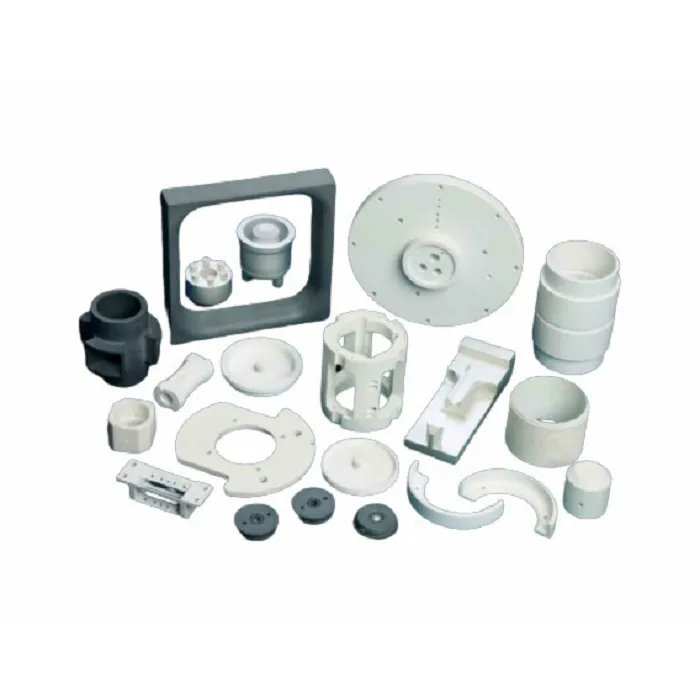
In terms of applications, plasma - machined ceramics can be used in a wide range of industries. In the aerospace industry, they can be used for components that need to withstand high temperatures and harsh environments. In the medical field, ceramic parts can be used for implants or surgical instruments. And in the electronics industry, they can be used for substrates or insulators.
If you're in the market for ceramic parts that require precision machining, I encourage you to consider plasma machining. It's a technology that offers a lot of potential, especially when it comes to creating complex shapes and achieving high - quality finishes. At our company, we have the expertise and the equipment to handle your ceramic machining needs. Whether you need a small batch of prototypes or a large - scale production run, we can work with you to find the best solution.
If you're interested in learning more about our ceramic material machining services or have a specific project in mind, don't hesitate to reach out. We're always happy to discuss your requirements and provide you with a quote. Let's work together to bring your ceramic projects to life!
References
- "Advanced Machining Processes" by P. K. Jain
- "Ceramics: Structure, Properties, Processing, and Applications" by W. D. Kingery, H. K. Bowen, and D. R. Uhlmann
- "Plasma Technology for Materials Processing" by J. P. Boeuf and J. C. Pfender